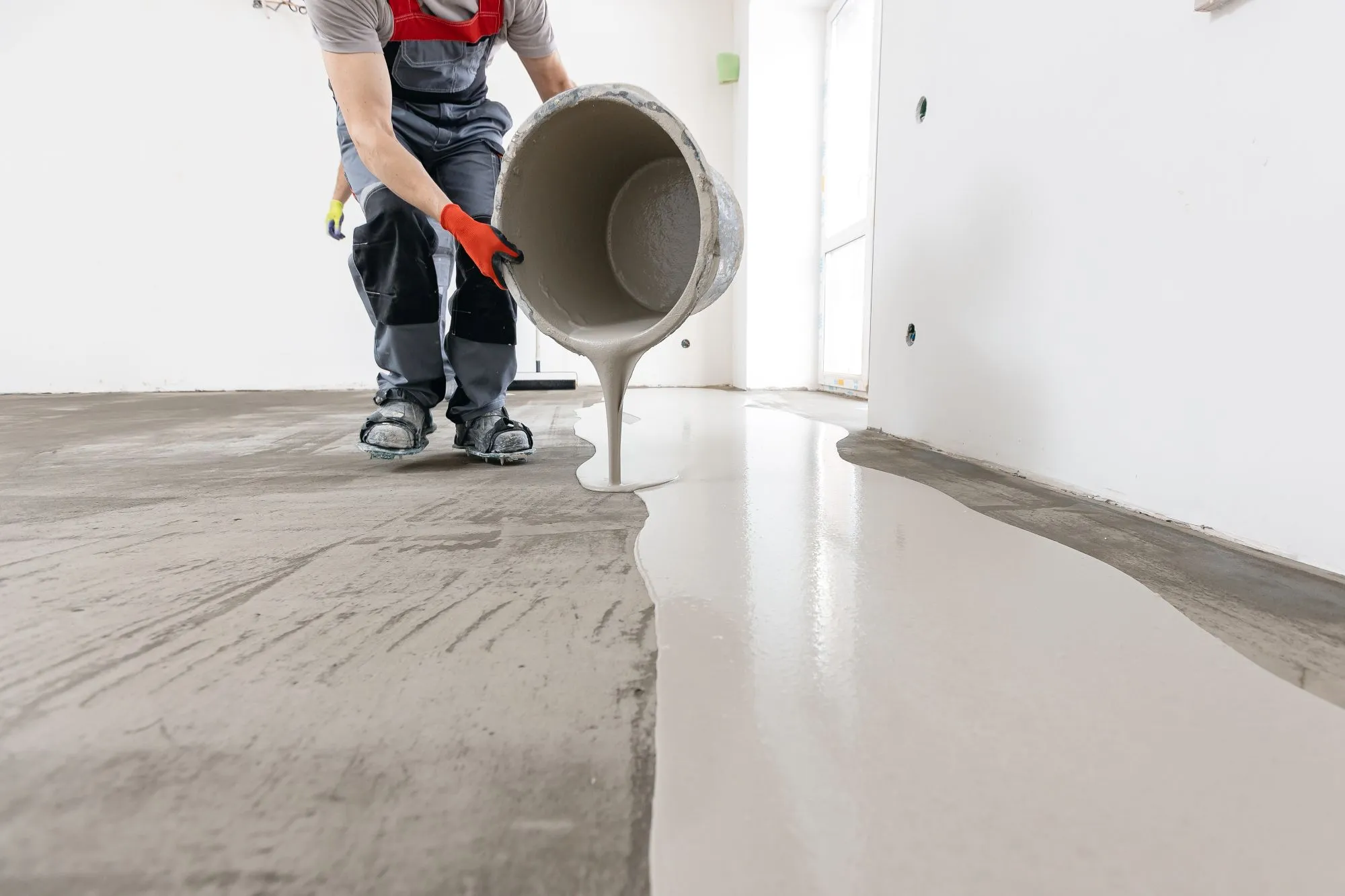
When pairing new concrete with epoxy, timing, moisture management, and surface preparation are critical to preventing costly coating failures. For property owners, facility managers, and general contractors managing an epoxy floor coating installation, understanding curing timelines and proper surface profiling is essential to a successful build. This FAQ guide explores the science behind applying epoxy coatings, detailing why the traditional 28-day rule exists and outlining the technical parameters required for reliable concrete and epoxy flooring combinations.
What is the standard waiting time before applying epoxy to new concrete?
The industry standard baseline waiting time is a minimum of 28 days. According to the Sherwin-Williams Contractor Center, a 28-day cure period for "green concrete" is recommended before any standard resinous systems are applied.
However, this 28-day mark simply indicates that the concrete has achieved most of its specified design compressive strength through the hydration process. It does not mean the slab is dry enough for standard coatings. Technical guidelines from IFTI Flooring Experts note that a standard concrete slab typically dries at a general rate of approximately one month per inch of slab thickness under ideal conditions (70°F/21°C and 50% relative humidity). In practice, actual drying times vary significantly based on slab thickness, mix design, ambient humidity, and vapor retarder placement. Therefore, the 28-day cure is a baseline milestone for structural hydration and testing, not an automatic green light for standard epoxy application.
Why can't I install epoxy flooring immediately after pouring concrete?
Applying standard epoxy coatings before excess moisture has evaporated leads to moisture-related failures. Because standard epoxy cures into an impermeable, non-breathable film, moisture vapor moving upward through the slab becomes trapped beneath the resin layer.
Trapped moisture and vapor transmission can lead to several common failure modes:
Osmotic Blistering: Fluid-filled bubbles and blisters develop under the coating when soluble salts trap moisture via osmosis.
Outgassing and Pinholing: Expanding air and water vapor force their way upward through the liquid epoxy during its gel phase, leaving tiny craters across the surface.
Adhesive Delamination: Moisture vapor transmission and elevated alkalinity at the bond line can degrade adhesion, causing sections of epoxy to detach from the substrate.
Research from the Association for Materials Protection and Performance (AMPP) indicates that moisture-related flooring failures cost the commercial construction industry hundreds of millions of dollars annually in premature rework and remediation.
How do contractors test concrete moisture before epoxy floor coating installation?
Professional installers rely on rigorous quantitative diagnostics rather than visual inspections, as a concrete surface can appear bone dry while its internal capillary networks remain completely saturated. As outlined in IFTI's step-by-step testing protocols, permanent HVAC systems must be operational for at least 48 hours before testing begins.
The two most widely recognized ASTM standards used for concrete moisture evaluation are:
ASTM F2170 (In-Situ Relative Humidity Probe Testing): Documented in the ASTM F2170 Standard Guidelines, this method measures internal relative humidity (RH) within drilled probe holes (typically at 40% depth for slabs drying from one side). Most standard epoxy systems specify maximum allowable thresholds between 75% and 85% RH, depending on the manufacturer. As noted by Denver Floor Coatings, this is one of the most reliable predictors of moisture conditions once the slab is sealed.
ASTM F1869 (Anhydrous Calcium Chloride Test): This test measures the Moisture Vapor Emission Rate (MVER) of the top 1/2 inch of the slab. Standard epoxies require an MVER of ≤ 3.0 lbs of moisture emitted per 1,000 sq. ft. per 24 hours.
How should new concrete be prepared for an epoxy installation?
New concrete is typically mechanically profiled to achieve an International Concrete Repair Institute (ICRI) Concrete Surface Profile (CSP) of 2 to 3 for standard thin-to-medium film coatings. Epoxy relies on mechanical interlock by flowing into open surface pores and micro-textures rather than chemically fusing to cured concrete.
During preparation, installers must remove the laitance layer (a weak, powdery top layer of fine cement particles) and any membrane-forming curing agents. According to the National Epoxy Technical Series, "More surface area means more grip; without mechanical profiling, the coating has nothing to hold."
To achieve this, professional contractors avoid outdated acid etching—which introduces unnecessary water into the slab and leaves erratic profiles. Instead, specialty installers like Crosspoint Epoxy use heavy-duty planetary diamond grinders equipped with integrated HEPA filtration to eliminate laitance and properly open the concrete matrix. As an Ontario-based contractor, Crosspoint Epoxy provides free on-site estimates to ensure the substrate meets these strict mechanical and diagnostic requirements prior to any coating application.
Can the 28-day rule be bypassed for fast-track construction projects?
Yes, accelerated construction schedules can often bypass the traditional 28-day wait by utilizing moisture-tolerant primers or Moisture Vapor Barrier (MVB) systems. These specialized epoxy primers can frequently be applied to green concrete (often within 7 to 14 days of pouring), provided the slab has cured sufficiently to allow mechanical surface preparation without dislodging aggregate.
Specialized systems, such as Sikafloor-1610 and Chem-Proof MVB Systems, are formulated to tolerate high alkalinity and suppress elevated moisture levels, with select systems rated for conditions up to 100% RH or high MVER limits. For commercial and industrial properties across Ontario managing tight schedules or seasonal constraints, Crosspoint Epoxy evaluates and incorporates these moisture mitigation systems where appropriate to ensure a dependable installation.
Successfully pairing concrete and epoxy flooring requires respecting the hydration process and conducting proper moisture diagnostics. Whether allowing adequate time for natural drying or utilizing specialized moisture mitigation primers, prioritizing verified moisture testing and mechanical surface preparation is essential for a durable, long-lasting floor.