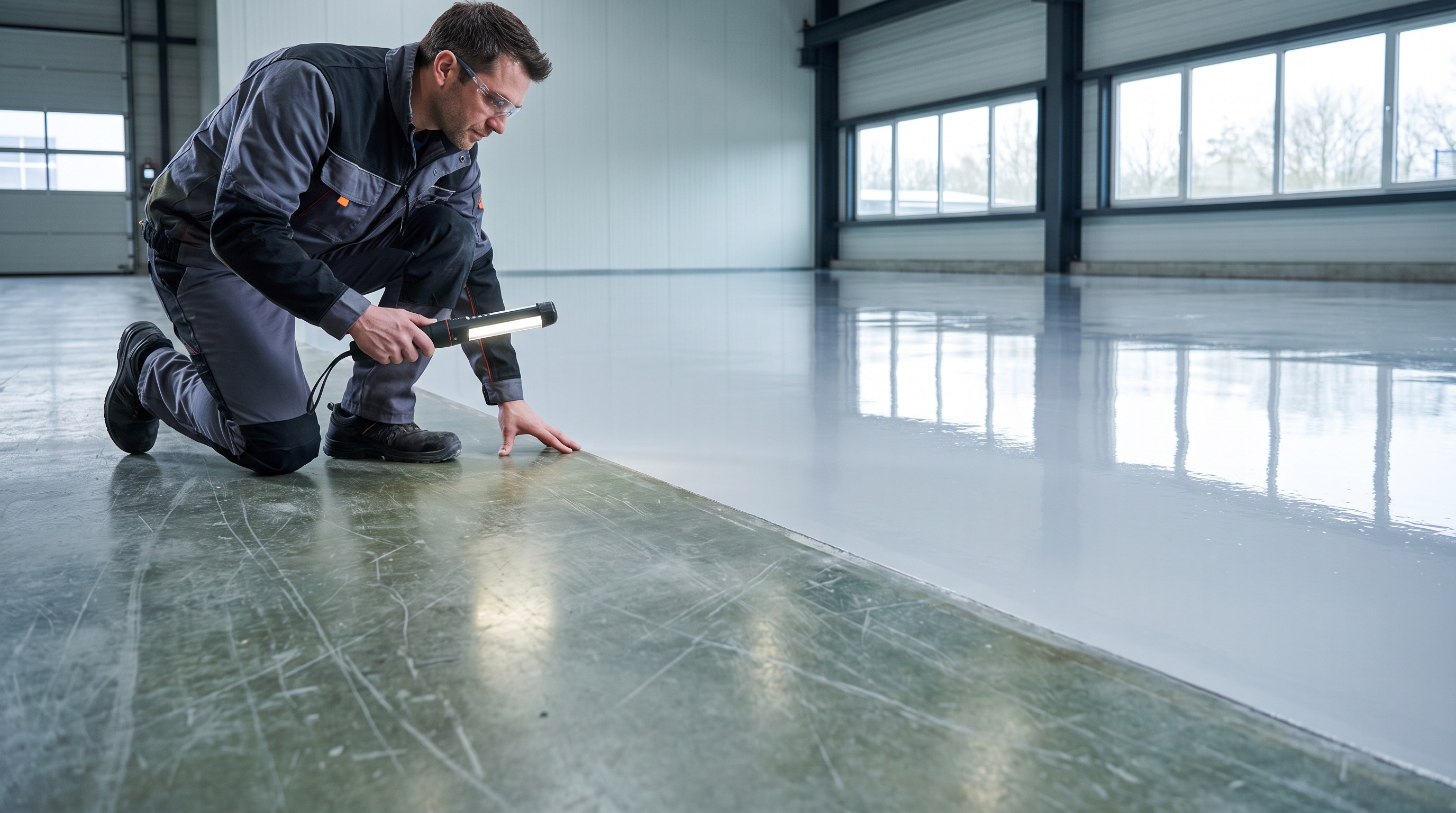
When an existing resinous floor shows wear, facility managers and property owners generally have three options for epoxy floor repair: localized patching, maintenance recoating, or full system replacement. The choice between sanding and applying a new topcoat versus grinding down to bare concrete is not just an aesthetic or budgetary preference; it depends primarily on the mechanical bond of the existing coating.
Applying a fresh maintenance topcoat over a peeling, blistering, or delaminating epoxy floor will not fix the underlying failure. Because a floor system transfers surface loads through the original concrete bond line, adding a new layer over a debonded base means both coats can pull away together under traffic and curing stress. A floor is only a candidate for recoating when its existing base remains soundly bonded to the concrete substrate.
What are Epoxy Flooring Systems?
Commercial and industrial epoxy flooring systems are multi-layered resinous coatings that protect concrete from heavy loads, chemical spills, and continuous traffic. A multi-coat system typically includes a primer (such as a moisture-mitigating formulation where slab conditions require it), a 100% solids epoxy body coat, and a sacrificial urethane or polyaspartic topcoat.
Over time, surface traffic wears down the sacrificial topcoat first. Refreshing the topcoat before vehicle tires and foot traffic wear into the structural body coat helps extend the service life of the system and avoids the higher cost and downtime of full removal and replacement.
The 3 Layers of Floor Epoxy Repair Diagnostics
Identifying where a failure is occurring determines whether a floor can be recoated or must be removed. Coating failures generally occur across three primary layers.
Layer 1: Sacrificial Topcoat Wear
When wear is confined to the topcoat, the floor is usually a strong candidate for a recoat. Common signs include a dull finish in high-traffic corridors, fine surface scratches, worn slip-resistant texture, or localized UV yellowing. As long as the primer and 100% solids body coat remain tightly bonded to the substrate, the existing surface can be mechanically abraded, cleaned, and recoated.
Layer 2: Intercoat or Substrate Bond Failure
If a floor exhibits peeling, flaking, or blistering, it requires localized repair or full replacement depending on the extent of the damage. Bond failure often stems from inadequate initial surface preparation (such as relying on acid etching instead of mechanical diamond grinding), excessive moisture vapor pressure in the slab, or harsh chemical exposure and incompatible cleaning agents that degrade the resin over time.
Layer 3: Concrete Substrate Failure
When the concrete slab itself is failing, recoating is not an option; the damaged coating must be ground off and the concrete repaired before a new system is installed. Symptoms include spalled joints, crumbling edges, deep structural cracks, or delaminated chips that pull up with fractured concrete attached to the underside. Resinous flooring relies on the cohesive strength of the upper concrete surface, so a weak or deteriorating slab will fracture beneath even a properly applied coating.
Testing Protocols Before You Recoat
Contractors and facility managers should test the existing coating before approving a recoat rather than relying on visual inspection alone.
Initial Field Screening Tests
Sounding Test: Tap across high-traffic zones using a screwdriver handle or hammer. Soundly bonded epoxy produces a solid thud, while delaminated areas produce a hollow sound.
Solvent Wipe Test: Rub an inconspicuous section with an acetone-soaked rag. If the coating softens, turns tacky, or transfers pigment, it may be an improperly cured film or a single-component coating that cannot reliably support a high-build recoat.
Water Absorption Check: Place water drops on worn traffic lanes. If water soaks in and darkens the floor, the protective coating has worn through to a porous underlayer or bare concrete.
Professional Contractor Diagnostics
Contractors also use physical adhesion and moisture evaluations to confirm recoat viability. In a tape adhesion test (such as ASTM D3359), a technician scores the coating down to the substrate and applies pressure-sensitive tape; if the coating flakes or lifts when pulled, the bond is too weak to recoat. When full system replacement is needed, checking slab moisture helps determine whether a standard primer is suitable or if a moisture-mitigating system is required to prevent future blistering.
Cost and Lifecycle Economics
Whether to patch and recoat or grind and replace comes down to the extent of bond failure across the slab. When adhesion loss is isolated to small, clearly defined areas such as impact points or joint edges, localized patching followed by a maintenance recoat can be practical. Once debonding, peeling, or blistering is widespread, spot repairs become unreliable because the surrounding coating often shares the same underlying preparation or moisture issues.
A maintenance recoat is significantly less expensive and faster to complete than full replacement because it avoids the labor, tooling, and material costs of grinding off the entire build and re-priming bare concrete. However, those savings only hold if the existing base coat passes adhesion testing. recoating over a compromised base leads to premature delamination, forcing the facility to pay for both the failed recoat and a full removal later.
Maintaining slip resistance is another common driver for proactive recoating. As foot traffic and forklift tires polish surface texture smooth over time, floors can become slick when wet or contaminated. Applying a fresh topcoat with broadcast aggregate restores surface traction without replacing the intact structural layers beneath.
How to Repair a Garage Floor Successfully
In residential garages, peeling often occurs when thin, water-based DIY kits are applied over acid-etched or improperly prepared concrete, leading to hot-tire pickup and flaking. Long-term repair requires diamond grinding the failed film off to bare concrete and installing a multi-coat 100% solids epoxy system.
Working With an Industrial Epoxy Flooring Contractor in Southern Ontario
Facility managers seeking an industrial epoxy flooring contractor in Southern Ontario require specialists who rely on mechanical diamond grinding and comprehensive diagnostic testing before recommending a solution. Industrial environments in this region face specific challenges, from heavy manufacturing loads to thermal shock, demanding rigorous concrete surface preparation instead of cheap acid-etching shortcuts.
Crosspoint Epoxy is an Ontario-based specialty coatings contractor installing 100% solids epoxy floor systems for commercial, industrial, and residential spaces. Providing mechanical diamond-grind surface preparation and free on-site estimates across Ontario, Crosspoint Epoxy evaluates existing coating adhesion and slab condition to help property owners determine whether a floor qualifies for a maintenance recoat or requires full replacement.
Finding a Warehouse Epoxy Flooring Contractor in Southern Ontario
When hiring a warehouse epoxy flooring contractor in Southern Ontario, logistics and distribution centers need systems suited to both regional climate conditions and heavy material-handling equipment. Thin coatings wear quickly in warehouse aisles because reach trucks and forklifts concentrate heavy loads onto narrow wheels, generating high point loads and shear stress during braking and turning.
For warehouse and industrial facilities in Southern Ontario, contractors like Crosspoint Epoxy use mechanical diamond-grind surface preparation paired with 100% solids epoxy systems built for heavy commercial and industrial traffic. Properly prepared high-build systems help protect concrete slabs from forklift traffic, road salt brine tracked in during winter, and seasonal freeze-thaw cycles near loading bays.