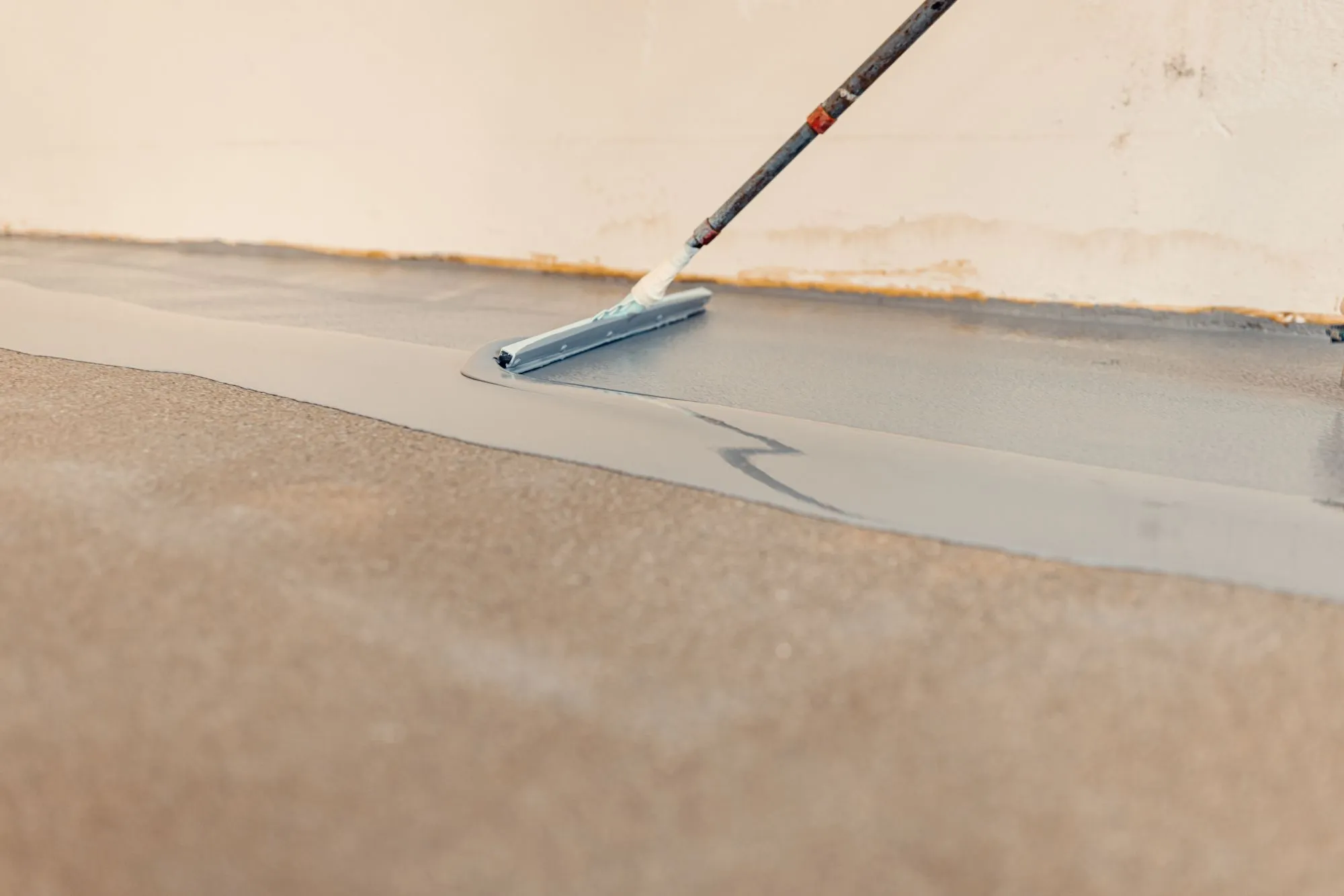
While epoxy flooring is renowned for transforming a standard concrete floor into a durable, high-performance surface, it is not a universal solution for every environment. Epoxy is fundamentally a rigid, thermoset polymer film. When subjected to operating conditions outside its material envelope—such as rapid thermal shock, unmitigated hydrostatic moisture drive, flexible substrates, or extreme chemical immersion—these floor coatings will experience premature bond failure, blistering, or delamination. Facility managers and specialty contractors increasingly prioritize fit-for-purpose resin chemistry to prevent premature failures and costly downtime.
What Causes Resinous Flooring Failures?
Epoxy is a high-tensile, rigid material. When asked to handle conditions outside of its structural capacity, its mechanical bond with the underlying concrete breaks. Specifying the correct resin chemistry—whether that involves cementitious urethane, polyaspartic, methyl methacrylate (MMA), or specialized moisture-mitigation primers—is the key to preventing recurring repair capital and avoiding disruptive operational shutdowns.
Extreme Thermal Cycling and High-Temperature Washdowns
Standard 100% solids epoxy systems generally soften and degrade when exposed to temperatures above 140°F (60°C). The fundamental root cause of failure under temperature shifts is a physical mismatch in thermal expansion.
The Coefficient of Thermal Expansion (COTE) of standard epoxy is roughly three times higher than that of the underlying concrete slab (Craftsman Concrete Floors). When subjected to rapid thermal cycling—such as 180°F clean-in-place steam washdowns over a 35°F refrigerated floor, or 375°F oil splashes—the epoxy coating and the concrete slab expand and contract at vastly different rates (Sherwin-Williams High Performance Flooring). This differential movement generates extreme shear stress at the bond line, leading to disbondment, edge lifting, and delamination (Summit Industrial Flooring).
Recommended Alternative: Cementitious urethane (polyurethane concrete) operates reliably between -40°F and 250°F. Because its thermal expansion rate closely matches concrete, it expands and contracts alongside the slab, making it the preferred specification for food processing facilities, commercial kitchens, and breweries (SaniCrete; Terrapin Construction Group).
Unmitigated Hydrostatic Moisture Vapor Transmission (MVT)
Skipping moisture testing before coating an on-grade or below-grade slab is a bet against physics. Concrete is a porous, capillary-rich material that acts as a natural wick for subterranean moisture.
When a non-breathable, high-solids epoxy is placed on a slab lacking an intact vapor retarder, free water inside the concrete evaporates upward. As moisture vapor hits the impermeable epoxy film, it condenses into liquid water and dissolves free alkaline salts from the concrete matrix. The resulting high-alkalinity fluid creates an osmotic gradient, drawing more water to the interface. Hydraulic and osmotic pressures build until they exceed the tensile bond strength of the epoxy, causing fluid-filled blisters, pinholing, and coating delamination (24/7 Restoration Specialists).
Recommended Alternative: Industry standards recommend quantitative moisture testing via in-situ relative humidity probes (IFTI; ASTM International). If relative humidity exceeds 75–85%, dedicated moisture-mitigation epoxy primers or breathable cementitious systems should be specified to hold back the moisture drive (National Epoxy).
Flexible, Movable, or Deflecting Substrates
Epoxy coatings cure through cross-linking into a rigid, non-ductile solid. They depend on a dimensionally stable substrate to maintain their structural integrity.
When standard rigid epoxy is installed over moving seams or flexible wood substrates without decoupling, it fractures along the panel joints and debonds under deflection stresses (Floor Chem Depot). Wood subfloors expand and contract continuously with ambient humidity (DG Floors), while metal mezzanines experience vibration and structural deflection.
Recommended Alternative: Facilities should utilize flexible epoxy or polyurethane elastomeric membranes with high elongation properties, reinforced with embedded fiberglass mesh over panel seams before applying topcoats (Duraguard Solutions; Duraamen).
Direct Exterior Exposure and Severe UV Radiation
Standard epoxy resins are formulated with aromatic polymer backbones that break down when exposed to short-wave ultraviolet (UV) radiation from natural sunlight.
Under direct UV exposure, aromatic epoxy coatings gradually yellow, lose their gloss, and form a chalky surface residue (Bel Covo). Extended exposure oxidizes the resin matrix, leading to premature microcracking. This makes traditional epoxy unsuited for outdoor patios, walkways, pool decks, and open-air loading docks.
Recommended Alternative: Aliphatic polyaspartic and polyurethane coatings are formulated with non-aromatic carbon backbones that are inherently UV-resistant. They resist yellowing and chalking under direct sunlight, making them an excellent choice for areas with high sun exposure (D and G Flooring; ProShield Epoxy).
Cold Temperatures and Rapid Turnaround Times
Epoxy polymerization is an exothermic reaction that is highly sensitive to ambient temperatures.
Standard 100% solids epoxies require a minimum slab and ambient temperature of 50°F (10°C) to cure properly. Below this threshold, curing slows dramatically or halts completely, resulting in an uncured, tacky surface (Bel Covo Research). Furthermore, standard epoxy systems typically require 5 to 7 days before they can comfortably support vehicle traffic (4 Corners Concrete Coatings).
Recommended Alternative: Polyaspartic systems cure rapidly in temperatures as low as 20°F (-7°C) and allow for next-day vehicle occupancy. For extreme commercial environments like continuous walk-in freezers, Methyl Methacrylate (MMA) cures within 1 to 2 hours in sub-zero temperatures as low as -20°F (-29°C).
The Crosspoint Epoxy Approach to Fit-for-Purpose Installation
For specialty contractors like Crosspoint Epoxy, educating clients on the physical limitations of specific materials is the foundation of long-lasting industrial and commercial installations. Operating across Ontario, Canada, Crosspoint Epoxy regularly mitigates severe regional environmental factors, such as intense winter freeze-thaw fluctuations, road salt exposure, and seasonal groundwater surges.
Rather than treating any single resin as a universal silver bullet, Crosspoint Epoxy champions a consultative approach. This methodology includes specifying hybrid systems—such as an epoxy base coat paired with an aliphatic polyaspartic topcoat—for spaces prone to hot-tire pickup and harsh weather variables. Above all, their expert installation teams emphasize that no high-performance coating will survive without rigorous mechanical surface preparation (diamond grinding or shot blasting) to achieve the proper structural profile, ensuring optimal mechanical interlock.
Comprehensive Floor Coatings Comparison Matrix
Choosing the correct system requires matching the chemistry directly to the facility's daily operational stress:
Flooring Chemistry | Thermal Shock Resistance | UV Stability | Ideal Applications |
|---|---|---|---|
Standard 100% Solids Epoxy | Poor (≤ 140°F) | Poor (Aromatic, yellows) | Dry manufacturing, warehouses, auto repair bays, indoor showrooms |
Cementitious Urethane | Superior (-40°F to 250°F+) | Moderate | Commercial kitchens, food/beverage processing, breweries, wash bays |
Polyaspartic / Polyurea | Moderate | Superior (UV-resistant, non-yellowing) | Residential garages, retail spaces, exterior patios, quick-turnout facilities |
Methyl Methacrylate (MMA) | Good | Excellent | Operating freezers, airport concourses, 2-hour rapid return to service |
Making the Right Flooring Choice
While traditional resins offer incredible longevity for standard interior environments, understanding their chemical and physical limits is essential for a successful installation. Whether you are researching flooring options for a garage, upgrading an industrial warehouse, or specifying a monolithic hygienic system for a commercial kitchen, working with an experienced contractor ensures the final product will survive its operational environment. By accurately assessing moisture vapor transmission, thermal cycling hazards, and structural deflection up front, you can select a tailored flooring system that provides reliable long-term performance.